
Oktoberfest
By Marina Kochetova
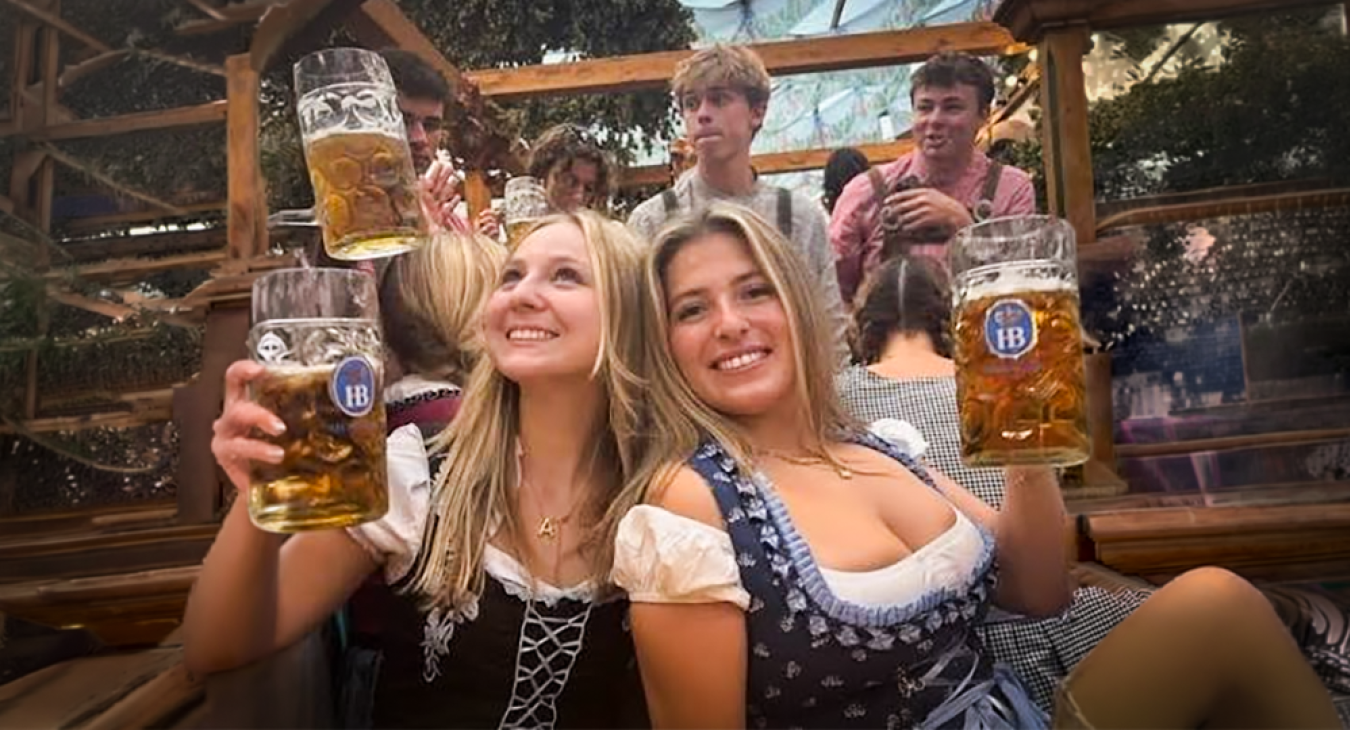
October is approaching, bringing with it, of course, the charm of the Canadian autumn. Alongside the uniquely beautiful maple leaves changing colour, another important October tradition in Ottawa is Oktoberfest—the beer festival that came to us from Europe. This year, it begins on September 26.
“Life is not all cakes and ale.” Of course, that is true. But today, let us reflect on beer. Oktoberfest is an autumn festival celebrating this ancient drink, and its main home is Germany. Germany is widely considered the birthplace of beer, although historians have established that people were drinking it long before the beginning of the Common Era.
The first brewery opened in Bavaria in the middle of the 11th century. Bavarian brewers were strictly forbidden to add sugar to their beer. To this day, brewers not only in Bavaria but throughout Germany continue to follow this rule. In Belgium, the Netherlands and Denmark, however, experimentation with beer recipes seems endless.
I remember visiting the Tuborg brewery in Copenhagen 30 years ago. I saw its enormous brewing vats with my own eyes and later sampled about 20 varieties of local beer in the tasting room. As I was no expert in the field, I did not notice much difference between them. What I do remember well is how enthusiastically the other participants praised the fresh beer, comparing it with its main competitor—another Danish favourite called Carlsberg. Which one is better? There is no accounting for taste.
Denmark’s geographical neighbours are not far behind. Beer can easily be called a symbol of the Netherlands, alongside tulips and wooden shoes. Dutch Heineken beer is popular around the world.
English beer is known as ale. In addition to its traditional ingredients, herbal extracts are often added to ale, giving it a distinctive aroma, colour and flavour. This kind of beer is neither pasteurized nor filtered and contains no preservatives. That is why a good ale always leaves a layer of brewer’s yeast at the bottom of the glass—proof that the beer is authentic!
Asia’s best-known beer is produced in Singapore. Singapore’s Tiger Beer has won 30 international awards. The first non-alcoholic beer, meanwhile, was invented by the Japanese. It is sometimes called children’s beer and is now produced around the world. In appearance, it looks just like the real thing.
Czech beer enjoyed exceptional popularity in the Soviet Union. Even today, it remains among the least expensive while maintaining a high standard of quality. Beer had many uses in Soviet life. Fashion-conscious women dampened their hair with beer before setting it in curlers. Teenage girls took brewer’s yeast to gain weight and help clear facial blemishes. Warm beer was believed to restore a lost voice.
Beer was also added to a variety of dishes. I have heard of okroshka made with beer instead of kvass or kefir, as well as chicken cooked in beer. I have also tasted biscuits made with beer, which gave the finished product a wonderfully crisp texture.
What made a particularly vivid impression on me during those distant Soviet years was a sweet beer soup popular in Estonia.
You can try making it yourself. It is quick and simple: bring 250 ml of milk to a boil. Beat one egg with 30 g of sugar, mix it with 120 ml of pale beer and add it to the milk. Warm everything gently, stirring carefully, then pour the mixture over cubes of sliced bread. Allow it to cool before serving. This soup is traditionally eaten cold.
In present-day Russia, American Budweiser has become popular. This happened after the Vancouver Olympics, which is why many Russians think of it as Canadian beer. Meanwhile, the Russian brand Baltika is becoming increasingly popular in Canada.
So-called “live” beer has become widespread and highly favoured in Russia in recent years. The beer gardens of the post-Soviet world have become an inseparable part of modern life. And in the land of maple syrup, it is even added to beer. Have you ever tried local maple beer? Breweries can be found on almost every corner in Canada, and Ottawa alone has dozens of them.
Canadians are also regular visitors to traditional British pubs. The much-loved English-style Royal Oak pub has been paying tribute to German brewers for several years by actively participating in the autumn beer festival. During Oktoberfest, its locations offer visitors not only a wide selection of German beers but also a special menu of German cuisine.
If German dishes appeal to you, beginning September 26 you will have an opportunity to enjoy them for a limited time at any of the many Royal Oak pubs throughout our city.