
In the Circus Ring
By Marina Kochetova
How many times have you been to the circus? Most likely, at least once! For people from the former Soviet Union, the circus is closely associated with childhood and was one of its defining features. The Soviet circus school was built on longstanding, profound traditions. Cities that, for one reason or another, did not have a permanent circus building were visited by the so-called big top, which brought its own “building” along. The circus was so popular in the USSR that the central television channels regularly broadcast a program called In the Circus Ring.
I spent my childhood in Tula, where we had a permanent circus building. Nevertheless, travelling big-top companies came to visit as well. Inside the tent, you felt as though you were in a regular circus. However, instead of a circular ring, there was a stage platform. At that time, the stage could not yet be transformed, and its wooden floor was not divided into sections of different heights, most of which now rotate at certain moments during a performance. Unfortunately, there were no unique sets either on or beyond the stage. Yet every performance was always sold out!
Many years have passed since then. Life has changed, and so has the circus as an art form. Canada, our second homeland, gave birth to the world-renowned Cirque du Soleil. Founded in Quebec, Cirque du Soleil grew into an international corporation headquartered in Montreal. This means that all production rehearsals for its new shows take place in Montreal, which is also home to the head office of this entertainment giant, employing nearly 4,000 people in total.
Cirque du Soleil is often described as a leader in the global entertainment industry and the circus of the future. Its productions combine several art forms—circus, theatre and music—with elements of professional sport. This entertainment giant has developed a distinctive creative style: on the one hand, it has completely abandoned the use of trained animals; on the other, it has preserved the spectacular atmosphere and theatrical beauty of the traditional circus.
Soviet circuses always featured a live orchestra that provided musical accompaniment for the acts. Today, a unique musical score is composed for every Cirque du Soleil show, while songs are performed live for the audience. This requires the participation of professional vocalists. Professional dancers are also an essential part of the production, as its unconventional choreography would be impossible without them.
Indeed, Cirque du Soleil’s directors create complete theatrical performances built around a specific storyline. Every character is therefore a unique creation with a distinct role to fulfil onstage. Today, Cirque du Soleil brings together some of the finest creative talent from around the world!
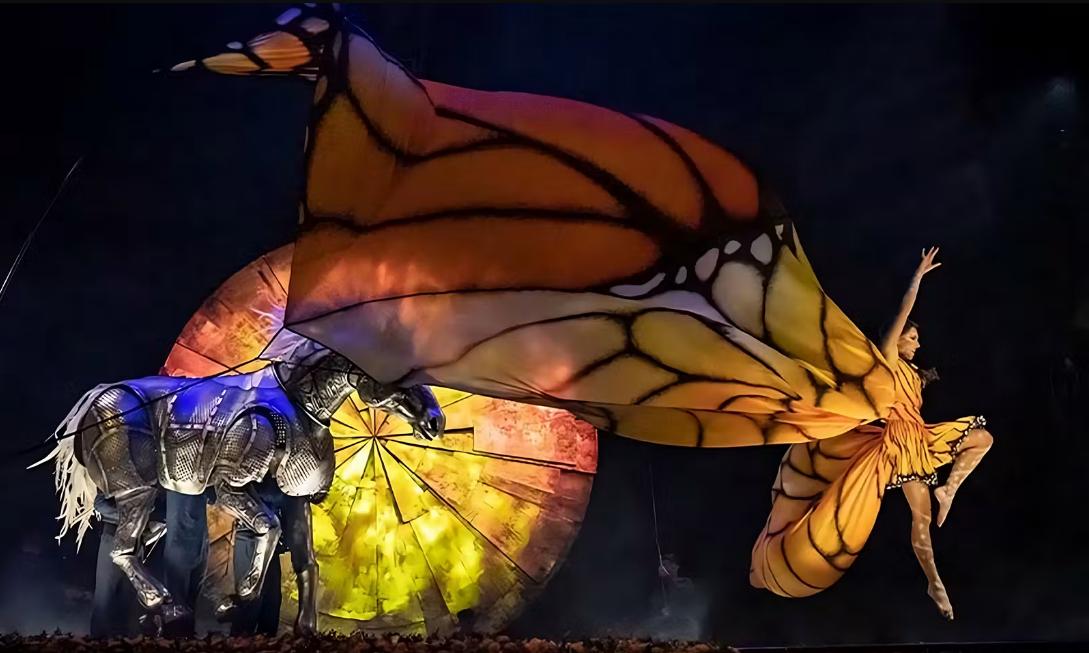
Acrobatic acts, alternating with comic interludes, form the foundation of its modern productions. The technical sophistication is truly impressive, as is the flawless work of the lighting team, which creates unforgettable patterns and sweeping paths of light. The extraordinary costumes also deserve the highest praise. It is said that as much as six and a half kilometres of fabric may be required to make the costumes for a single production! In short, there is certainly plenty to see.
From September 10 to October 18, Cirque du Soleil will be visiting Ottawa, on St. Laurent Boulevard, with its production Luzia. Tickets are already on sale.