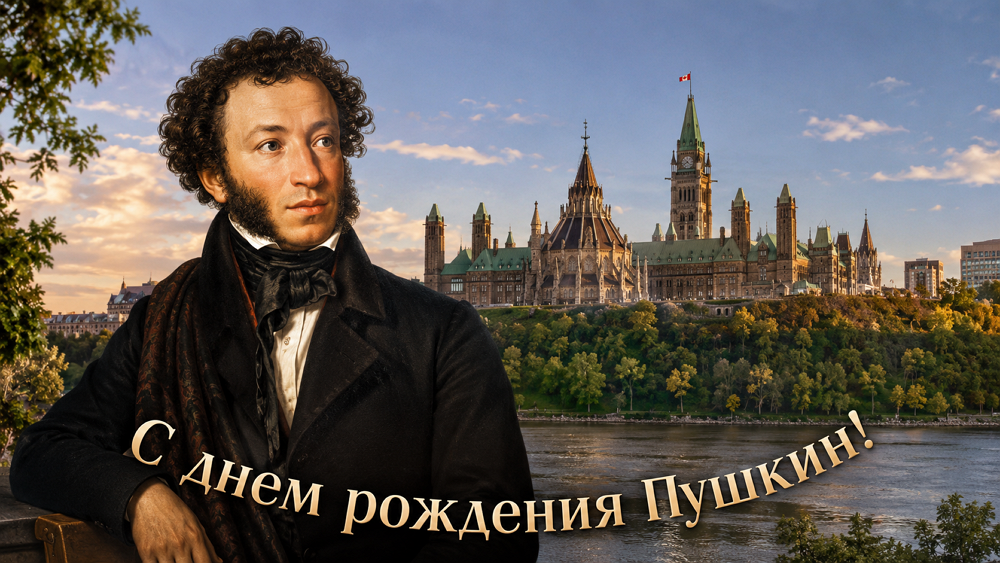

Happy Birthday, Pushkin!
Today, June 6, we celebrate the birthday of Alexander Sergeyevich Pushkin — a poet whose name has become part of life itself for many of us. Pushkin was born on June 6, 1799, according to the modern calendar, but it feels as though he has always been with us: in childhood, in school notebooks, in family libraries, in our first attempts to read aloud and understand the beauty of the Russian word.
We all grew up with his poems. At first, with magical fairy tales — where an old fisherman catches a golden fish, where a green oak stands by the seashore, where kindness and justice live side by side with wonder. Later, as we grew older, we discovered a different Pushkin — subtle, profound, passionate, ironic, and wise. His poems and verses about love, freedom, dignity, friendship, memory, and fate became not just literature, but part of our inner language.
In a way, one could say that the entire culture, intonation, sense of humor, imagery of speech, and even certain character traits of people who grew up in the republics of the former USSR have been influenced by Pushkin’s work. We may live in different countries, speak different languages, and have different life experiences, but Pushkin’s lines remain a shared cultural code that unites generations.
It is especially meaningful to remember this here in Ottawa, where love for poetry continues to live not only in books, but also in real human connection. We have a wonderful poetry club, TOLK, which brings together some of Ottawa’s finest poets, musicians, and creative people. This year, TOLK celebrates its 10th anniversary, and yesterday a beautiful concert was held in honour of this milestone. It was a true celebration of words, music, friendship, and inspiration — the kind of celebration that Alexander Sergeyevich himself would probably have enjoyed.
Today we want to say: Happy birthday, Alexander Sergeyevich! Thank you for all the poems, fairy tales, lines, and images you gave us. Thank you for the language, the beauty, and the light that continues to live within us through the centuries.