
Small but Precious
By Marina Kochetova
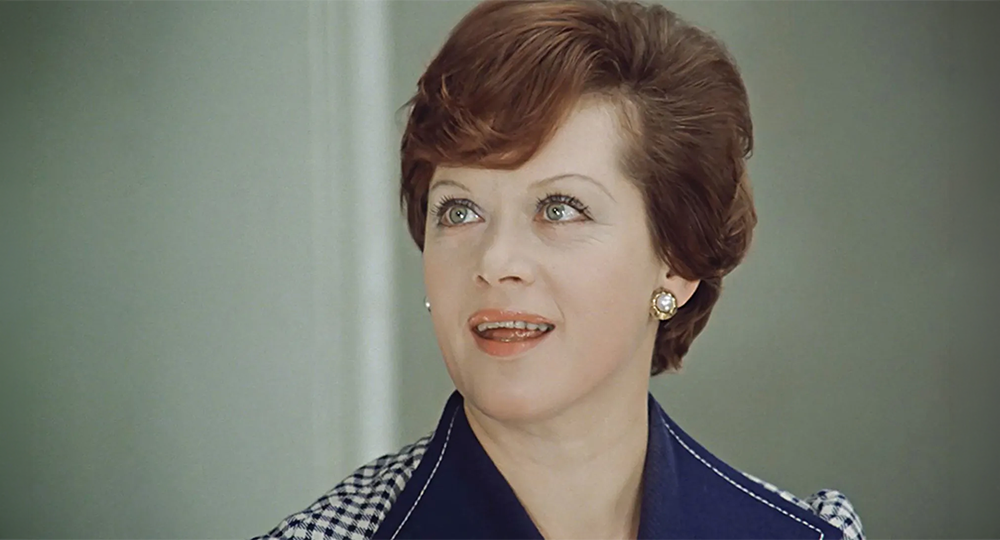
The Russian proverb “Small but precious” refers to people who are not as simple as they may seem at first glance, those whose modesty and delicacy conceal something greater. The lady I am about to speak of is petite in stature, yet immense in significance. For decades, she has remained an extraordinarily talented, valuable, brilliant, important, and deeply respected person worthy of the closest attention. She is the beloved stage and screen actress Alisa Freindlich. Yesterday, while wandering through the boundless expanses of the internet, I came across one of Alisa Brunovna’s more recent concerts, and a flood of old memories came rushing back—memories I felt compelled to share.
Back in 1986, when I lived in the ancient Russian city of Tula, famed for its gunsmiths, and was a university student, Alisa Freindlich came to perform there. For some reason, the event was held not in the philharmonic concert hall, but in the assembly hall of our university. It was supposed to be a creative evening where audience members could ask questions aloud or submit them on slips of paper. In those years, that format of artistic meetings was extremely popular. More people wanted to attend the meeting with the famous actress than there were seats in the hall. Since I was already regularly writing notes for the university newspaper, I was given an invitation ticket with a good seat so that I could write an article. I was delighted and prepared my notebook and pen so as not to miss anything in Alisa Brunovna’s replies to the audience’s questions. Sitting beside me were two correspondents from regional newspapers, jokingly calling our row the press box. On the one hand, I was pleased to be seated next to well-known Tula journalists. On the other hand, we were all expected to write about the same event for different newspapers. That carried a certain responsibility. I kept wondering why I, just some student—not even from the philology department, but from foreign languages—had been chosen, when many professors of philology were in the audience. Perhaps they simply wanted to relax and enjoy the evening. Together with the long-awaited guest, two young guitarists came onto the stage. It turned out that this creative evening would be a dialogue with the audience, but through music and poetry. A musical-poetic composition based on poems by Marina Tsvetaeva, Osip Mandelstam, and others began. What a surprise!
After each piece, the slightly bewildered audience responded with enthusiastic and grateful applause. I vividly remember words spoken by Alisa Brunovna: “If only we were as united as poets once were! They wrote poems to one another, and now those poems reach us from the Cosmos.” One wanted to listen to the actress recite poetry and sing romances again and again. Alas, the evening lasted only fifty minutes and was sustained in an academic, камерный tone.
Sensing that the concert was nearing its end, and realizing there would be neither continuation nor answers to questions, I intuitively decided that I urgently needed to get backstage before others who also wished to speak with the celebrity. It helped that I knew every entrance and exit in my home university very well. Strangely enough, no backstage interview with Alisa Freindlich had been arranged, and she had no intention of speaking with journalists. And then suddenly there was me. Fortune favors the bold! What has often saved me in life is quick reaction and spontaneous action in unforeseen circumstances. I had not even prepared any questions.
Up close, Alisa Brunovna was a short, very fragile woman. Yet her charm was just as powerful as it was on stage and on screen, where she always seemed so grand. The same intelligence and tact were there as well. Behind the scenes, she looked somewhat different: citing fatigue, she took off her glasses with their huge, then-fashionable frames, lit a menthol cigarette, and graciously agreed to answer a couple of my questions quickly—before the cigarette burned out. After her smoke break, a black Volga was already waiting for her, and the guitarists hurried to carry their instruments to the car.
I do not have that article with me here in Canada, although it has been preserved in Tula. Many years have passed, but I remember clearly that the legendary actress’s answers were brief. I do not know whether they were stock phrases. In a state of mild euphoria, under the hypnotic charm of a Great Actress, I hurriedly asked her something or other, trying not to pose foolish questions.
What surprised me was that in her work Freindlich considered not cinema, but theater, to be the main thing. It was theater that she called a need of the soul, while cinema was merely a creative necessity. She described theater as “an incurable chronic illness” she had suffered from since childhood, “but a good illness—there is no need to cure it.” Yet I was even more astonished by her confession that she often used obscene language, explaining that a strong emotional release in the theatrical world was very common and considered normal. About her native St. Petersburg she said, “I love this swamp.” And then, already hurrying away, the incomparable Alisa Brunovna wished me “many grains of happiness,” clarifying that “it tends to slip away like sand through one’s fingers,” though some grains do remain. Without a doubt, our brief conversation became one of those grains for me. My collection of grains of happiness has grown considerably since then. But the warm memory of Alisa, in her unique kingdom of theatrical wonders, still warms my soul to this day.